
Travel doesn't just inspire creative direction. It fundamentally changes how you see brands.
I've crossed a lot of borders. Forty-three countries across six continents, most of them for work, some of them for the particular kind of education that only happens when you're completely out of context and have no choice but to pay attention.
What I didn't expect was how much that movement would change the way I see brands. Not just hospitality brands — all brands. The way a logo reads differently in different light. The way luxury means something completely different depending on which side of which city you're standing on. The way a visual language that communicates sophistication in one culture communicates coldness in another, and warmth in a third.
Travel didn't give me references. It gave me a different kind of seeing. And that, more than any education or any single project, is what shapes the creative direction I bring to every brief.
What you learn when you stop being comfortable
The most valuable trips I've taken weren't the beautiful ones. They were the disorienting ones — the places where my assumptions stopped working and I had to actually look, rather than pattern-match against everything I already knew.
There's a specific alertness that kicks in when you're genuinely unfamiliar with your surroundings. You read environments more carefully. You notice things that locals have stopped seeing entirely — the visual language of a neighbourhood, the way shops signal quality or approachability, the unspoken codes that tell you who belongs here and who is being welcomed and who is being tolerated. You start to understand that every built environment is a communication system, and that most of us are fluent in our own without realising it's a language at all.
This is directly applicable to brand work. Every brand operates inside a context — a cultural, visual, emotional context that shapes how it's received. The brands that work across contexts are the ones built on something universal enough to translate. The ones that fail outside their home market are usually the ones that mistook local fluency for universal truth.
I've seen this play out in luxury hospitality specifically, and the pattern is consistent: the properties that resonate globally have found the thing about their identity that doesn't require explanation. The ones that struggle internationally are often communicating in a visual dialect that only makes sense at home.
How different cultures taught me to read luxury differently
In Japan, luxury is communicated through absence. The fewer objects in a space, the more considered each one is — and the consideration itself is the statement. A single ceramic bowl. A particular quality of silence. The way a door slides rather than swings. These are signals that require no translation for the right audience, but they are completely illegible if you've only ever understood luxury as accumulation.
In Morocco, luxury is layered and sensory and generous to the point of overwhelming. It communicates through abundance — of pattern, of colour, of hospitality, of time. A meal that takes four hours is not inefficient; it's the whole point. Stripping that back in the name of minimalism would be stripping out the identity entirely.
In Scandinavia, luxury lives in functionality elevated to the point of perfection. The chair that is exactly right. The light that is managed with extraordinary intention. The complete absence of anything that doesn't earn its place.
Three completely different visual and experiential languages, all communicating the same underlying promise: you are somewhere that cares, deeply, about your experience. The translation is different every time. The feeling is the same.
What this taught me is that there is no universal visual language for luxury — but there are universal emotional registers. And the job of creative direction is to find the visual language that activates the right emotional register for the right audience in the right context. You can't do that from a desk. You have to have been in enough rooms to know what the registers feel like.
The brand perception gap
One of the most consistent things I've noticed across forty-three countries is the gap between how brands see themselves and how they're actually perceived — and how that gap widens the further you get from the brand's home context.
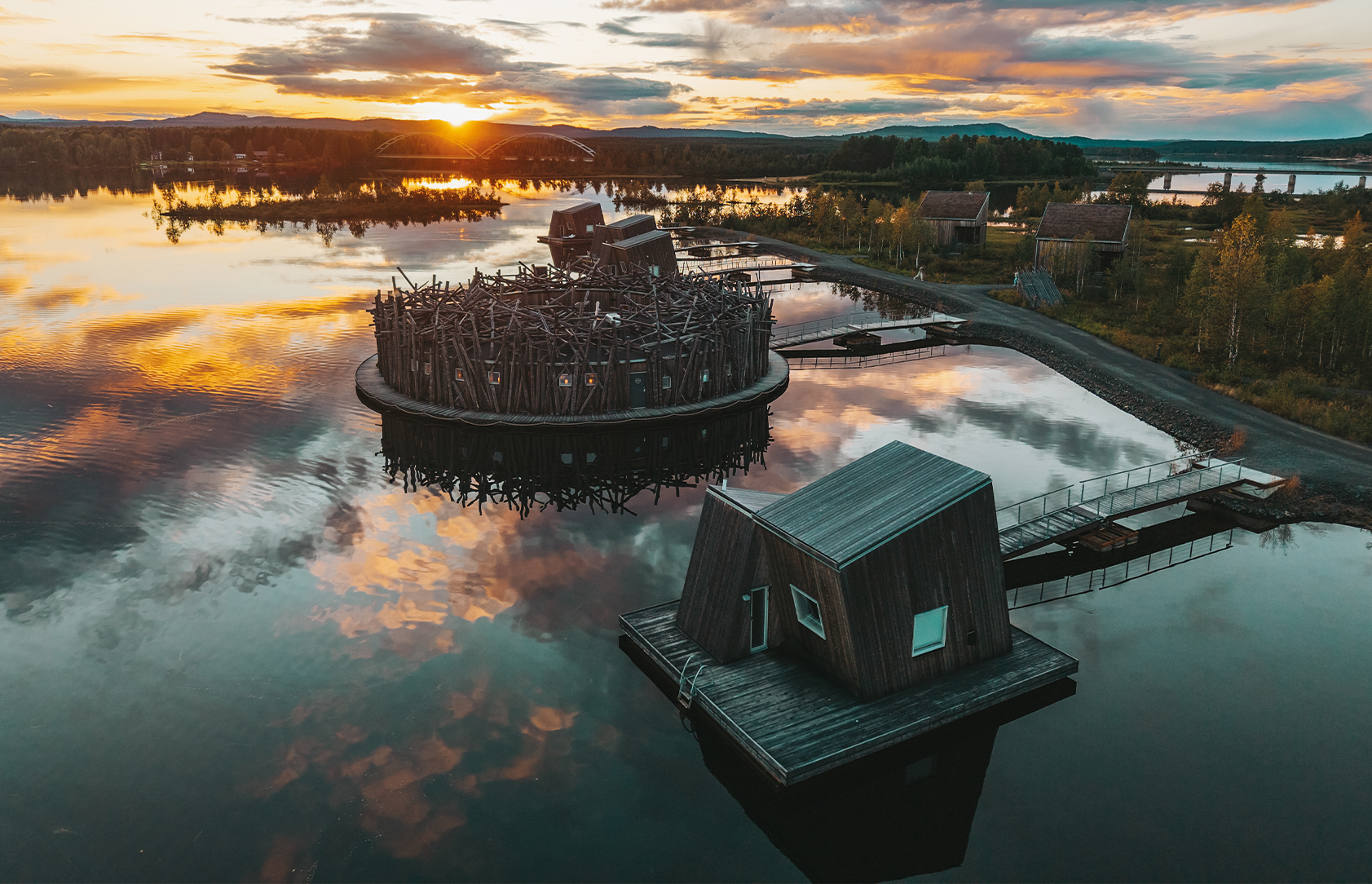
A European luxury hotel brand that communicates perfectly to its domestic audience can read as cold and transactional in Southeast Asia, where hospitality has a completely different emotional vocabulary. A resort built around the aesthetic of raw, unfinished materials — which reads as sophisticated restraint in a Scandinavian context — can read as unfinished and underinvested in a market where luxury is still communicated through finish and gloss.
These aren't failures of quality. They're failures of translation. The brand is communicating clearly — just in the wrong language for the audience it's trying to reach.
The creative directors and brand strategists who navigate this well are, almost without exception, people who have spent significant time outside their home context. Not touring, not travelling for inspiration — living, working, paying attention. Building a genuine fluency in how different audiences read visual signals, what creates trust, what creates desire, what creates distance.
This is what forty-three countries actually gave me. Not a mood board. Not a collection of references. A kind of perceptual flexibility — the ability to step outside my own visual assumptions and ask, genuinely: what does this communicate to someone whose context is completely different from mine?
What this means for the work
When I take on a project now, one of the first questions I ask is: who, specifically, are we trying to reach — and what is their visual world? Not just their demographic profile, but their aesthetic context. What brands do they trust? What visual signals tell them they're in the right place? What communicates quality in their frame of reference?
These questions can't be answered by research alone. They require a kind of experiential knowledge that only comes from having been inside enough different contexts to understand that your own is just one of many — and not automatically the most relevant one for the audience you're speaking to.
Travel taught me that. Forty-three countries of being the outsider, of having to read environments I didn't grow up in, of noticing the gap between what I expected to see and what was actually there. It made me a better creative director not because it gave me better references, but because it made me genuinely curious about perspectives other than my own.
That curiosity, I've found, is the most useful tool in the work. More useful than any software, any technique, any aesthetic sensibility. The willingness to ask: what does this look like from where you're standing?
The answer is almost always more interesting than what I would have assumed.
Curious what a genuinely global perspective could bring to your brand? Let's talk.